Your body, finally making sense.
Perimenopause rarely announces itself with one clear symptom. Teala's daily check-in pairs what you're feeling with your Apple Watch data, so two weeks from now the pattern is something you can see, not just something you're guessing at.

On-device only
No account, no server. If you export a backup, you hold the only key.
Apple Watch aware
Sleep, HRV, and heart rate pulled in automatically, no manual entry.
Not a diagnosis
Structured evidence for a conversation with your doctor, never a replacement for one.
Explore Teala
A clearer way to compare your options
Learn how privacy, Apple Watch context, and appointment preparation fit into a perimenopause tracker.
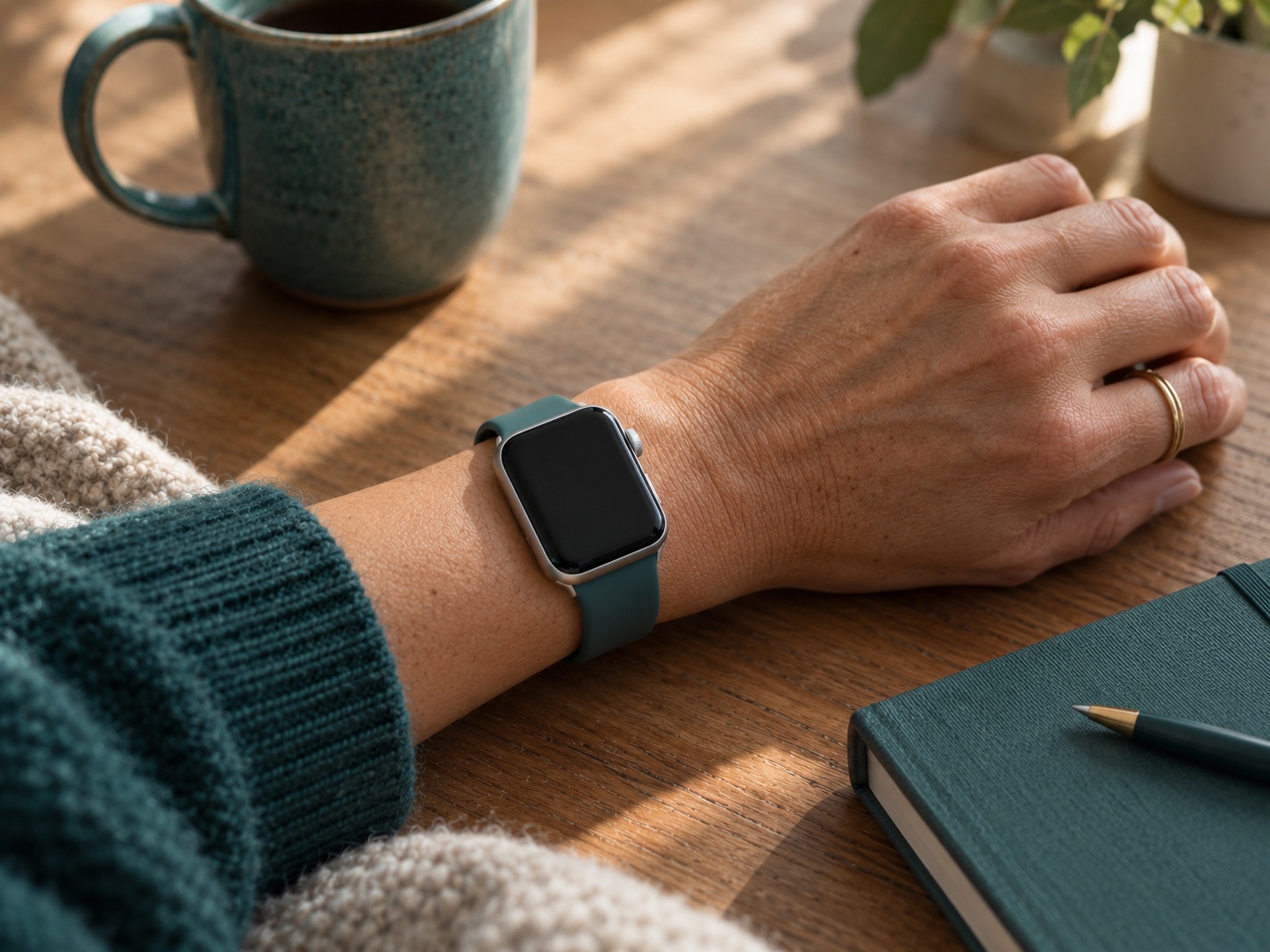
Your watch and your check-in, talking to each other
Your Apple Watch already knows your sleep was rough and your resting heart rate crept up overnight. Your 90-second check-in knows you had three hot flashes and a bad night. Teala puts those two accounts of the same night next to each other, instead of leaving you to compare two separate apps yourself.

Something to bring to the appointment
A twelve-minute visit isn't much time to reconstruct three weeks of symptoms from memory. The Clinical Report turns what you've logged into a structured summary, sample sizes and confidence levels included, so the conversation can start from evidence instead of "I think it's been worse lately."
Teala doesn't diagnose. Everything it shows you is a starting point for a conversation with a clinician, not a replacement for one.
From the library
All articles-
Symptoms Hot Flashes and Anxiety Amplify Each Other The physiological loop that makes both worse, and how to break it.
-
Nutrition & Lifestyle What to Eat (and Avoid) During Perimenopause and Menopause Less about foods that are forbidden, more about which ones work against you.
-
Mental Health Perimenopause Symptoms at Work Hot flashes, brain fog, and fatigue hit hardest during peak career years.
Questions people ask
Do I need an Apple Watch to use Teala?
No. The daily check-in works on its own. If you do wear an Apple Watch, Teala pulls in sleep, heart rate, and HRV automatically so you don't have to log them by hand.
Does Teala diagnose perimenopause or menopause?
No. Teala isn't a diagnostic tool. It organises what you log and what your watch measures into patterns you can see, and structured evidence you can bring to a doctor. Any conclusion about your health is one for you and a clinician to make together.
Where does my data live? Is it private?
On your iPhone. There's no account to sign up for, and your check-ins, symptoms, and health data are never stored on a server, aside from anonymized, non-identifying usage analytics. The only way any of your actual health data leaves your device is if you choose to create an encrypted backup file yourself.
What's free, and what do I have to pay for?
Logging your top symptoms and reading your daily check-ins is free. Paid tiers unlock tracking across all eight symptom domains, the correlation engine that connects symptoms to possible triggers, and the Clinical Report for appointments.
Can I actually bring this to my doctor?
Yes, that's what the Clinical Report is for. It turns your logged history into a short summary with sample sizes and confidence levels included, so a twelve-minute appointment can start from evidence instead of trying to recall the last three weeks from memory.